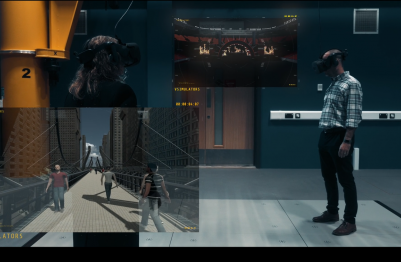
Experience designer Holovis has completed a crucial part of the University Of Exeter VSimulators setup: successfully incorporating nine users collaboratively in a virtual environment while simultaneously collecting data about their experience.
Holovis specialise in multisensory, highly realistic synthetic training environments and the development of emerging technologies and proprietary software into these spaces. The company’s team of media creators, software developers and engineers have designed and are delivering the physical set up and media for the Exeter VSimulators facility.
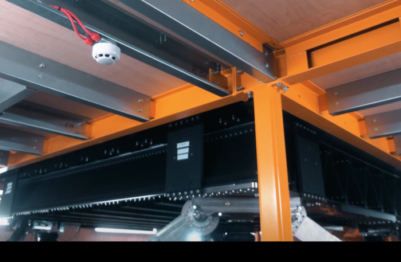
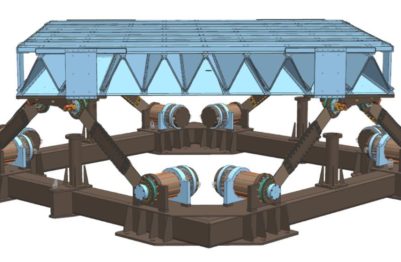
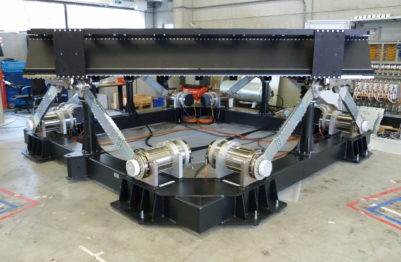
Each user will wear a Vive Pro headset to be immersed into the virtual environments. They can then move freely around the 3.5m x 3.5m space on top of the custom designed E2M octopod motion platform and custom made AMTI force plates, seeing avatars of the other participants in the virtual world, tracked to their unique perspective.
Users are mapped in the environment through an optically tracked rig that surrounds the platform. The 16 cameras ensure highly accurate tracking with ultra-low latency, so everything moves in real-time for the users and to their unique perspective.
This is run by a proprietary software suite created by Holovis which renders the virtual environment for the nine simultaneous users and creates the overarching operator view. It also enables the collection and compilation of data, including the position of users, the force from the plates, movement measured by four accelerometers and the user reactions. This is synchronised frame by frame and presented to the research team for analysis.
The VSimulator will be the first of its kind to track and measure structural movement and environmental conditions, with human perception monitoring, psychology and physiology, within a fully controllable virtual environment.
Working with Holovis from the beginning of the project, it was decided that an optically tracked rig on-board a motion platform with Virtual Reality head mounted displays (HMDs) was the best way to immerse users into the environment and capture the measurements that we need. The VR view allows everyone to have their own unique viewpoint and gives better viewing perspectives of things that are close to the individuals.
The Exeter VSimulator is due to launch in Spring 2020.