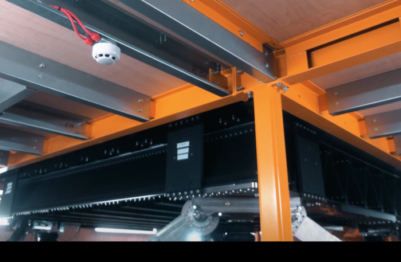
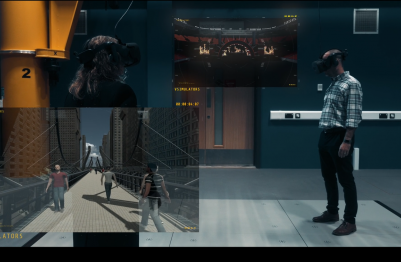
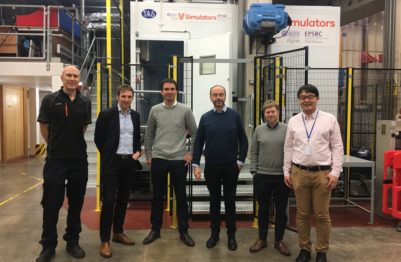
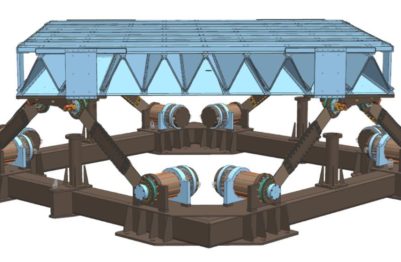
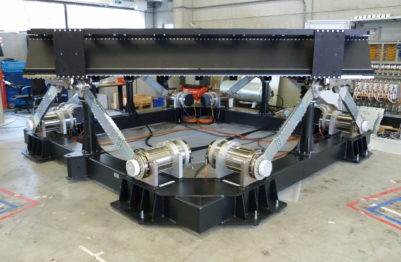
A study into motion sensitivity that could help people with a rare inner ear condition that affects their balance is now underway at the VSimulators facility at Exeter Science Park. Dr Jessica Tyrrell at the University of Exeter’s Medical School is using the facility’s state-of-the-art motion platform to understand motion sensitivity and balance control strategies in individuals both with and without compromised vestibular systems as part of her funded research into Meniere’s Disease.
It is hoped the research could lead to improved rehabilitation programmes and an improvement in building designs for people with Meniere's, which can lead to vertigo, tinnitus, nausea and loss of hearing.
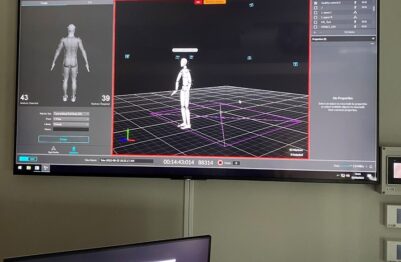
Dr Tyrrell is collaborating with Dr Genevieve Williams, a researcher in the University’s Sport & Health Sciences, as well as Mr Malcolm Hilton from the University of Exeter Medical School, and a funded PhD student, Mr Matt Smith. The team are capturing when participants detect motion, through methods including oral confirmation, motion capture suits - wearable devices that record the movements of the wearer and pressure through force plates - instruments that measure the ground reaction forces generated by a body standing on or moving across them, to quantify parameters such as balance and gait.
Dr Tyrrell said: “It is really exciting that this research is now underway, and we hope it will have an impact in terms of improving design in the built environment and using better materials to improve the experience of people with inner ear disorders, as well as improving rehabilitation programs for individuals with Meniere’s.”
The £100,000 funding for the research was provided by Graham Cole and was secured by the University’s Global Advancement team as part of the ‘Making the Exceptional Happen’ Campaign. Graham was awarded an Honorary Degree from Exeter in 2015 and has been a member of University of Exeter Council since 2017.